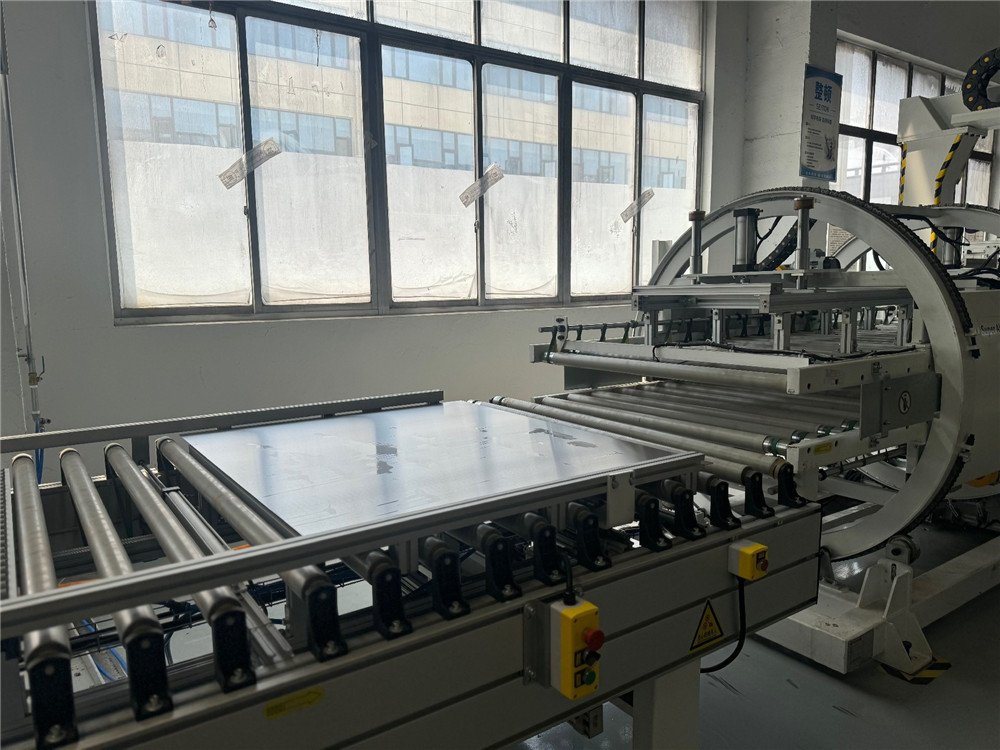
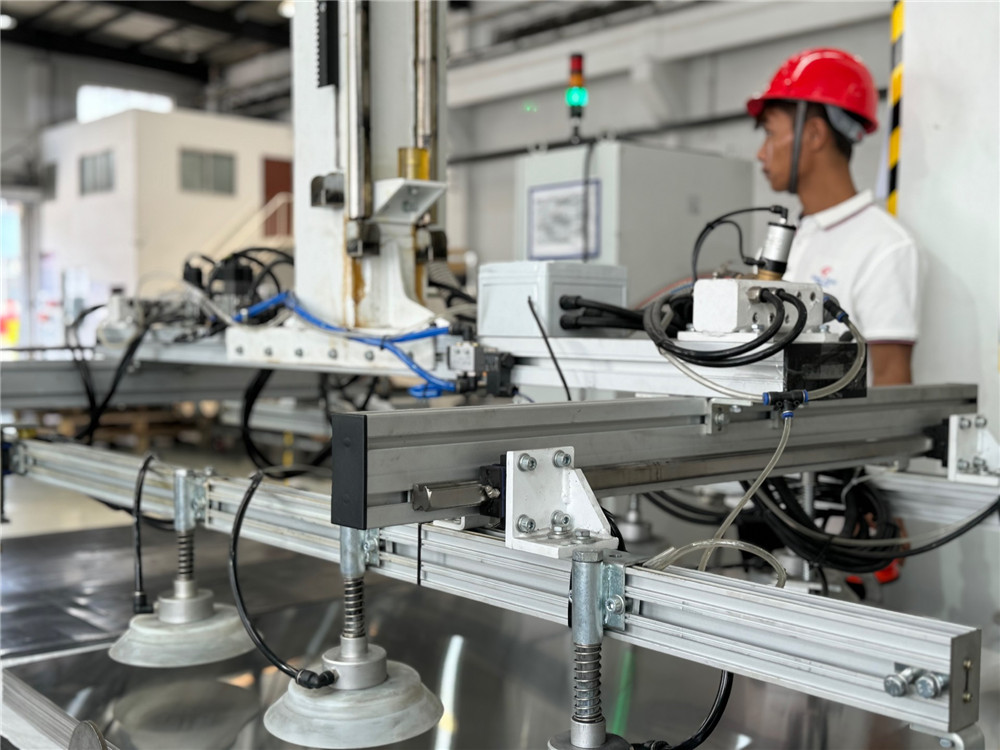
In modern industrial manufacturing, material innovation and advancements in application technology have significantly boosted production efficiency and product quality. As a key processing material, vacuum laminated steel plates play a critical role across multiple industries due to their excellent performance. This article explores their characteristics, manufacturing process, application areas, and future prospects.
Characteristics of vacuum laminated steel plates
Vacuum laminated steel plates are produced using vacuum pressing technology and have the following notable features:
High strength and hardness: The vacuum pressing process significantly enhances the physical properties of the steel, allowing it to withstand high mechanical stresses and impacts, maintaining excellent stability in demanding environments.
Strong corrosion resistance: Special surface treatments give the plates outstanding resistance to corrosion and oxidation, even under high temperature or humid conditions, extending service life.
High surface finish: Vacuum pressing ensures a smooth, flat surface that reduces friction, simplifies cleaning and maintenance, and improves aesthetic appeal.
High dimensional accuracy: During manufacturing, thickness and dimensional tolerances are strictly controlled, meeting the requirements of high-precision industrial applications.
Manufacturing process of vacuum laminated steel plates
The production process is complex and precise, with core steps including:
Material selection: High-quality stainless steel substrates are chosen, with strict control over purity and composition to ensure product performance.
Surface treatment: Prior to pressing, steel plates are cleaned, polished, and pickled to remove oxides and impurities, providing a foundation for lamination.
Vacuum pressing: The treated plates are placed in a press under vacuum, subjected to high temperature and pressure to consolidate and sinter. This process effectively eliminates air bubbles and impurities, producing a denser and more uniform internal structure.
Cooling and inspection: After pressing, rapid cooling prevents property degradation. Subsequent inspections verify dimensions, hardness, and surface finish to ensure compliance with standards.
Application areas of vacuum laminated steel plates
Thanks to their superior physical and chemical properties, they are widely used across industries:
Aerospace: With high strength and corrosion resistance requirements, vacuum laminated steel plates are used for aircraft structural components, engine parts, and other critical applications.
Automotive manufacturing: High-strength, high-hardness steel is needed for car bodies and engine housings, making vacuum laminated plates ideal for these components.
Electronics and electrical equipment: The high precision and surface finish of vacuum laminated plates make them suitable for smartphone, computer, and electronic device casings and internal parts.
Energy and chemical industries: Corrosion-resistant vacuum laminated steel is applied in petroleum, natural gas, and chemical equipment manufacturing to combat equipment and piping corrosion.
With ongoing technological advances, production processes and applications of vacuum laminated steel plates continue to evolve. In the future, higher-performance and lower-cost products are expected, with applications potentially expanding into emerging areas such as medical devices and green energy.
In summary, vacuum laminated steel plates play an indispensable role in modern industry. Leveraging their inherent advantages, they serve multiple fields effectively, and with technological progress, their application prospects are set to broaden further, supporting higher-quality production across industries.



 Home
Move Forward Together
Semiconductor & Electronics Industry
Vacuum laminated steel plates: technological innovation and broad applications
Home
Move Forward Together
Semiconductor & Electronics Industry
Vacuum laminated steel plates: technological innovation and broad applications